25 Terror Years of Technology
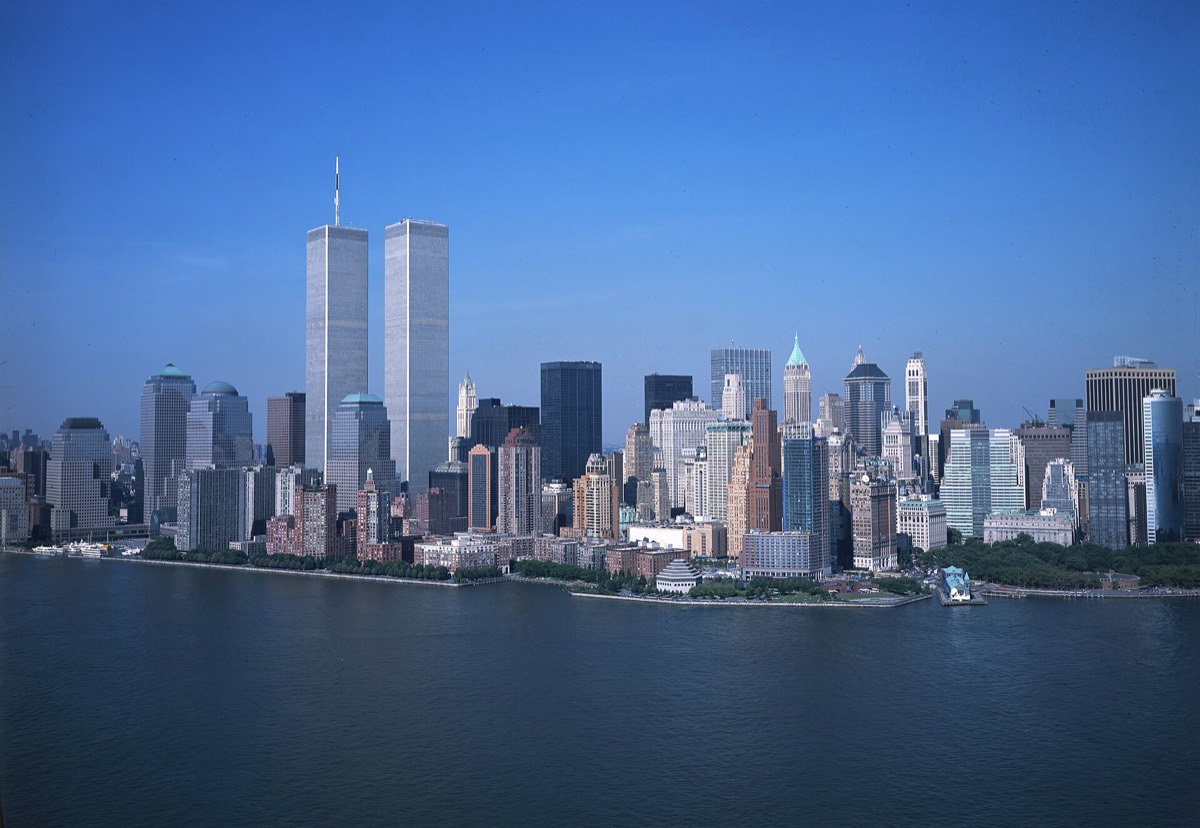
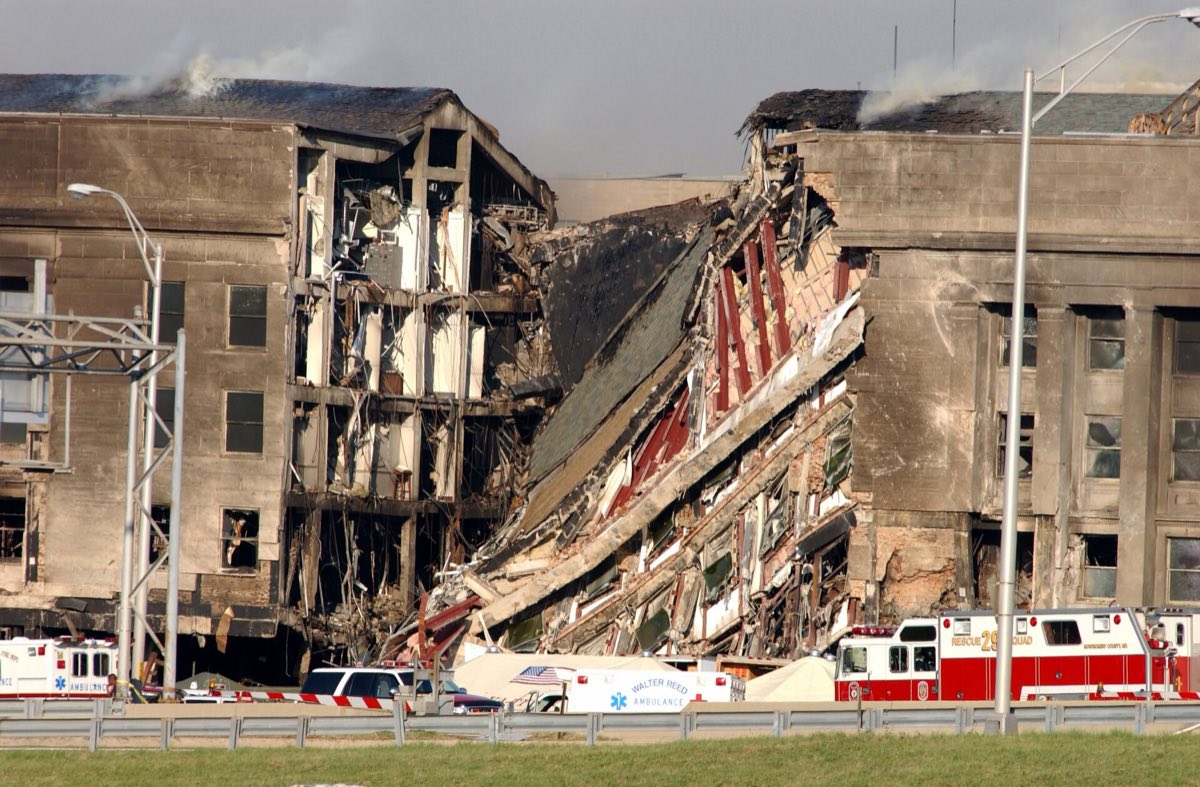
Twenty-five years ago this morning, two hijacked airliners were flown into the World Trade Center in Lower Manhattan. A third was flown into the Pentagon. A fourth, United 93, came down in a field near Shanksville, Pennsylvania after the passengers fought back. 2,977 people were killed.
The South Tower stood for 56 minutes after it was hit. The North Tower stood for 102. By 10:28 a.m. Eastern, the two tallest buildings in New York City were gone.
This is not a history of that day — better people have written it, and the names are read aloud every year. This is a narrower piece, about the machines: what the technology of September 11, 2001 could and could not do, what the attack broke, and what computing became because of it.
Windows XP had not shipped yet. Neither had the iPod. Six percent of American homes had broadband, and by 9:30 that morning the news sites had fallen over.
Twenty-five years is long enough that the technology of that morning now needs explaining. That is the useful thing about an anniversary with a fixed time on it — 8:46 a.m., Eastern — because it gives you a hard benchmark instead of a vague sense that things used to be slower.
I was in Charlotte, North Carolina that morning, working for an OEM. Like most people who worked around computers then, I found out the way you found out about everything in 2001: somebody told me, and then we tried to load a web page, and the web page would not load.
What was actually on the desk
Start with the operating systems, because the timing is genuinely startling. The two operating systems that would define the following decade both shipped after the attack.
Windows XP had been finished — it went to manufacturing on August 24 — but it did not reach retail until October 25, 2001. Forty-four days after. Mac OS X 10.1 "Puma", the first version of OS X that was genuinely usable day to day, shipped on September 25, 2001. Fourteen days after.
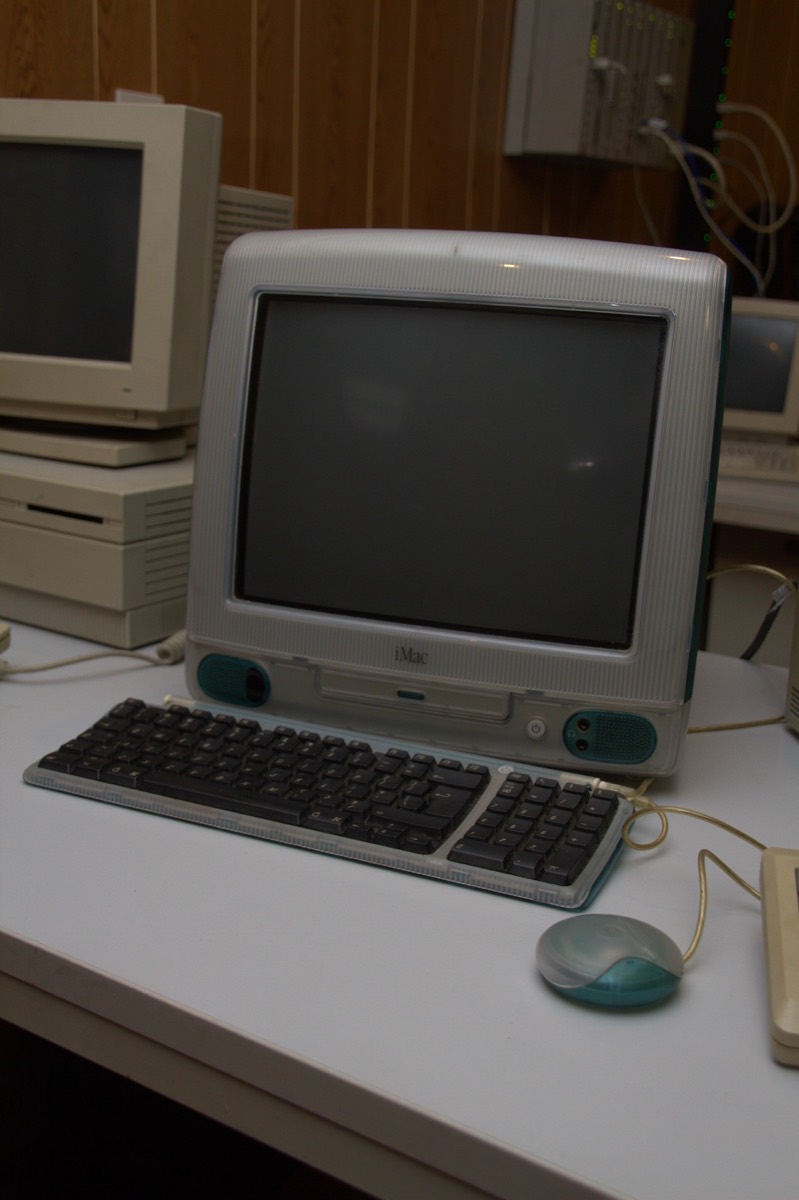
So on the morning itself, the installed base looked like this:
| Role | 11 September 2001 | 11 September 2026 |
|---|---|---|
| Windows desktop | Windows 2000, 98 SE, MEXP existed but was not for sale | Windows 11Windows 10 reached end of life in Oct 2025 |
| Mac desktop | Mac OS 9OS X 10.0 "Cheetah" shipped in March but was slow and thinly adopted | macOS 26.6 |
| Linux | Kernel 2.4, Red Hat 7.1, Debian "potato"Ubuntu did not exist until 2004 | Kernel 6.x, everywhere, mostly invisible |
| Server room | NT 4.0, Windows 2000 Server, Solaris 8, NetWare | Linux containers on somebody else's hardware |
| Phone | Nokia, Motorola. Calls and SMS. | A supercomputer, and it is not close |
| Typical RAM | 128–256 MB | 16–32 GB |
| Typical disk | 20–40 GB, spinning | 1–4 TB, solid state |
| Home broadband | 6% of US households | near-universal |
That last row is the one to sit with. In April 2001 Pew put dial-up at 41% of American homes and broadband at 6%. Roughly four in five people connecting from home that morning were doing it over a modem. The internet of September 11, 2001 was a thing most people visited, briefly, at 44 kilobits per second, and then hung up so someone could use the phone.
What was in your pocket: nothing that helped
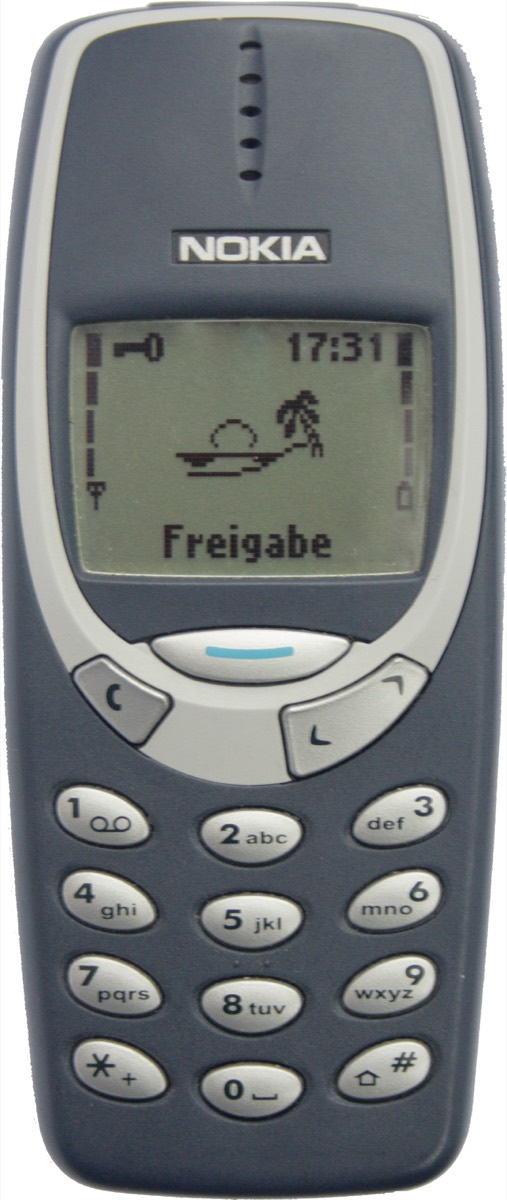
There were no smartphones. There was no mobile internet that any reasonable person would use. Text messaging existed and worked; photographs from a phone essentially did not.
And then the cellular network in Lower Manhattan collapsed — partly from load, and partly because a significant amount of antenna infrastructure had been mounted on the towers themselves.
People fell back on what still worked. Landlines, where the circuits were not saturated. Two-way pagers, which is a large part of why BlackBerry's enterprise business took off in the years immediately after. AIM, ICQ and MSN Messenger — instant messaging held up when voice did not, a detail many people who were online that day still remember. And email, which mostly kept moving.
The morning the web could not carry it
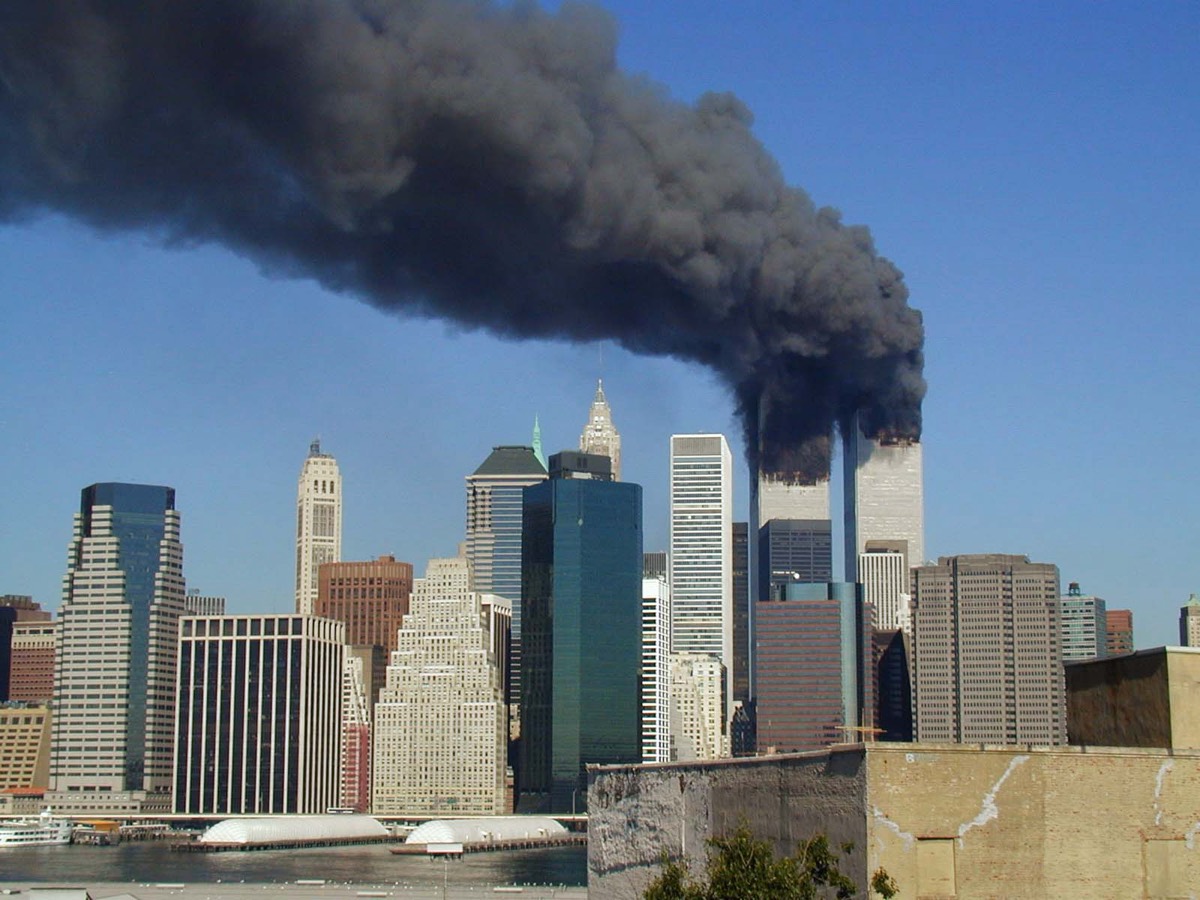
What happened to the web that morning is well documented and still worth stating plainly, because it is the part that changed the industry.
Traffic to the major news servers began doubling every seven minutes from roughly 8:50 a.m. By just after 9 a.m., when the second aircraft hit the South Tower, CNN, MSNBC, the New York Times and Yahoo News were all visibly degrading. This was not a failure of the network in the middle. The pipes held. It was the servers at the edges falling over under a load nobody had designed for.
Akamai — then three years old, the company that had effectively invented content delivery as a business — had never moved more than about 6 gigabits per second in its history. MSNBC decided to stream its broadcast live and blew past every record the company had. CNN made the opposite call and switched their Akamai delivery off entirely, which got pages out the door faster in the short term and removed their flash-crowd protection for the rest of the day.
The man who built the fix was killed on the first plane
Seated in business class on American Airlines Flight 11, directly in front of Danny Lewin, was Mohamed Atta.
Daniel Lewin was 31. An American-Israeli mathematician, an MIT researcher, a veteran of the IDF's Sayeret Matkal, and in 1998 the co-founder — with his professor Tom Leighton — of Akamai Technologies. The algorithms underneath the company were substantially his.
According to flight attendant calls, a 2002 FAA memo and the 9/11 Commission's account, Lewin moved against the hijackers in front of him and was killed by one seated behind him. It happened roughly twenty minutes before the aircraft struck the North Tower, which means he is believed to be the first person killed in the attacks.
The symmetry is not something anyone would have chosen. The company he built was, at that hour, carrying more traffic than it ever had, straining to keep the story of his own death reachable. Content delivery networks are now so ordinary that nobody thinks about them — they are the reason a breaking news event no longer takes the web down. That capability was being invented by a man who died in the event that proved it was needed.
What the towers taught the machines
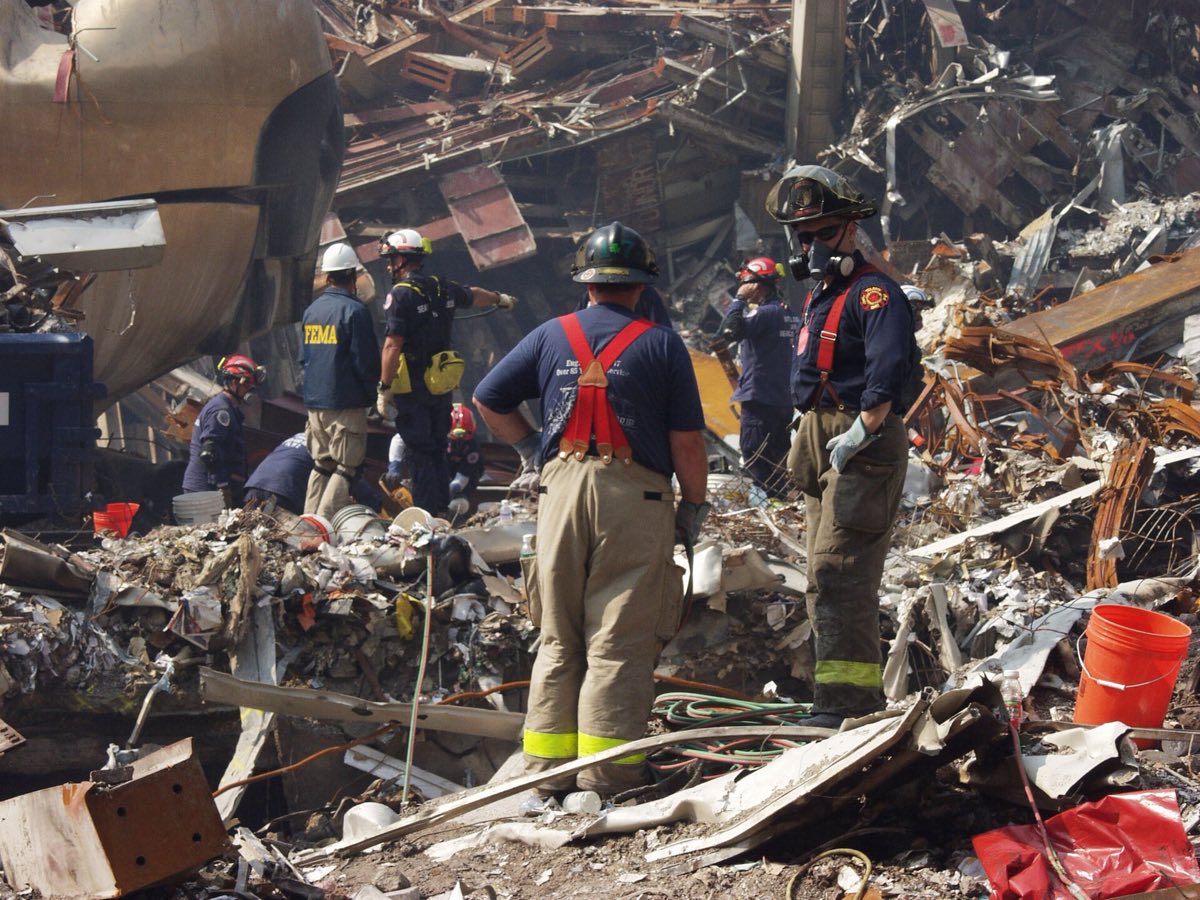
Some technology changed after 2001 for reasons that have nothing to do with 2001. Moore's law did not care. But five threads run directly from that morning, and they are still running.
2001–2005
the reactionSix weeks that set the next two decades
September 25: Mac OS X 10.1. October 23: the iPod. October 25: Windows XP. October 26: the USA PATRIOT Act is signed. Within the same weeks, the first armed Predator strikes are flown in Afghanistan — the beginning of remote, persistent, machine-mediated warfare.
Business continuity stops being an IT line item
Firms in and around the World Trade Center discovered what "offsite backup" meant when the offsite was across the street. Disaster recovery had been tape, a courier and a contracted hot site measured in days. It became geographic separation, measured in miles and then in regions — and it became a board-level question rather than an operations one.
Total Information Awareness is defunded, and does not die
DARPA's programme to correlate everything about everyone was killed by Congress after public objection. Its component projects were distributed to other agencies and continued. This became the pattern: the named programme is cancelled, the capability is not.
The web gets fast enough to live in
Gmail launches with a gigabyte of free storage, which in 2004 read as a prank. Facebook opens. Ubuntu ships its first release. Windows XP Service Pack 2 turns the firewall on by default — an unglamorous change that did more for ordinary security than most of what came after it.
2006–2012
the platform shiftAmazon rents out the data centre
S3, then EC2. Capacity becomes something you request rather than something you buy, rack and insure. The flash crowd that flattened CNN in 2001 becomes, within a decade, a billing line.
The iPhone
Six years after a morning when the most useful mobile device in Manhattan was a two-way pager, a general-purpose networked computer goes in everyone's pocket. Android follows in 2008. Every subsequent emergency is documented, distributed and argued over by the people inside it, in real time.
FirstNet — the most direct line from that day
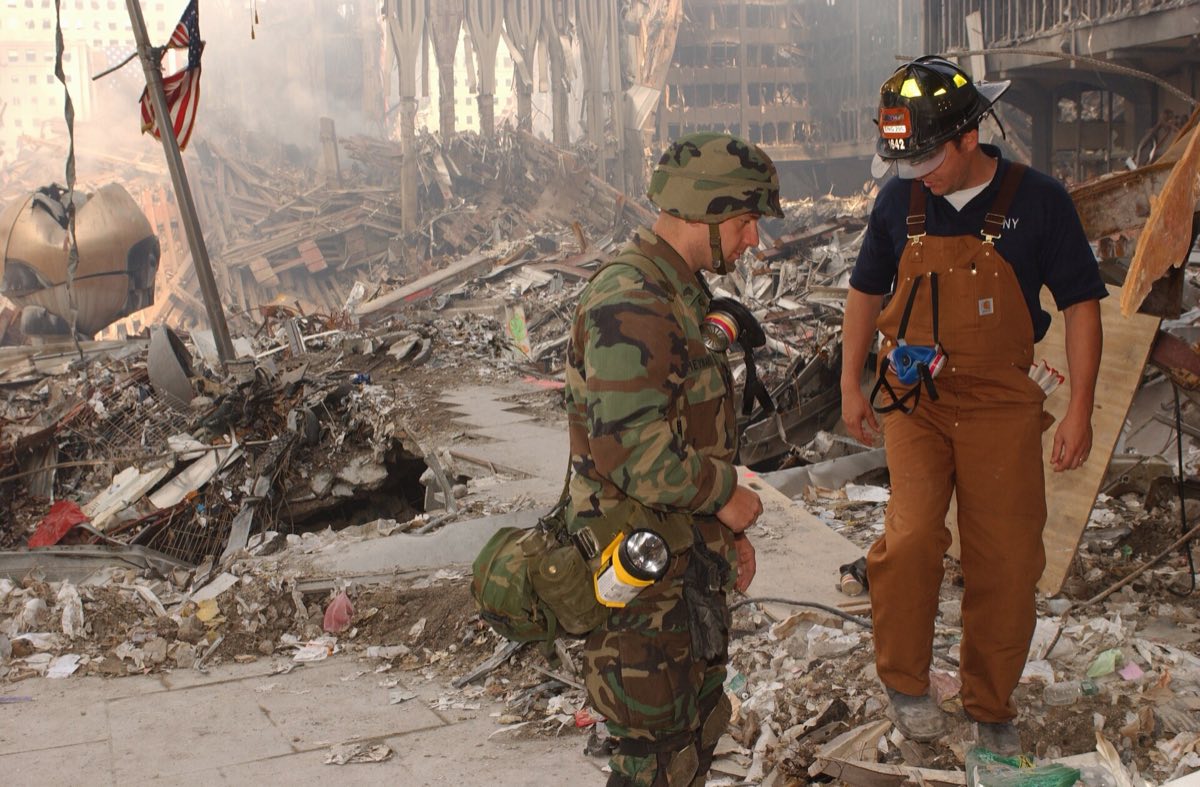
FDNY, NYPD and Port Authority police ran incompatible radio systems. An observer in an NYPD helicopter reported the North Tower girders glowing and warned of imminent collapse. The FDNY never received it. The 9/11 Commission recommended a dedicated, interoperable, nationwide public-safety network; Congress created the First Responder Network Authority in the Middle Class Tax Relief and Job Creation Act of 2012.
2013–2020
the exposure, and the encryptionThe shape of it becomes public
The Snowden disclosures describe the collection architecture built in the decade after 2001: bulk metadata, upstream collection, the legal theories underneath. Whatever position you take on the disclosures themselves, they ended the argument about whether the capability existed.
Let's Encrypt makes TLS free
The single most consequential response by the engineering community. Certificates had been a cost and an annual chore; they became automatic and free. HTTPS goes from a minority of page loads to the overwhelming default within a few years.
The second global stress test — and it held
A significant fraction of the working world moved onto the network in about a fortnight. Video conferencing, remote desktops, VPN concentrators. There were bad days, but nothing resembling 9:30 a.m. on September 11, 2001. Nineteen years of CDN, cloud and capacity engineering were being graded, and they passed.
2021–2026
where we actually areLanguage models arrive in public
The transformer paper was 2017; the consumer moment was late 2022. By 2026 a model will read every document in an archive, summarise every call, and describe every frame of every camera. The 2003 objection to Total Information Awareness was partly that correlating everything was not practical. That objection has expired.
The ledger, honestly kept
An anniversary piece that only lists improvements is a brochure. So:
What genuinely got better. The web does not fall over when something terrible happens — that specific 2001 failure is solved. Traffic is encrypted by default. Storage and compute are effectively free at the scale an individual operates. Emergency services can talk to each other. A backup in the same building is now understood to be no backup at all, and that understanding cost 2,977 lives to acquire.
What we traded. The surveillance architecture stood up in the eighteen months after the attack was sold as temporary and is now permanent, ambient, and largely commercial rather than governmental. The 2001 web was slow, ugly and fragile, and nobody was watching you read it. That is the part of 2001 that is genuinely gone, and it was not taken by the hijackers. It was handed over afterwards, by us, with very little argument.
Twenty-five years, measured on one desk
The compounding is easier to feel at small scale than at civilisational scale. So, concretely:
WHAT THIS ESTATE RUNS, 2026Sixty-two hosts. Two hundred and fifteen mailboxes. A mail server, an identity provider with single sign-on, a directory, a listserv, video conferencing, an IRC network, a library, and roughly a dozen applications — across two virtual machines that cost less per month than a decent dinner, administered by one person.
WHAT THAT WOULD HAVE REQUIRED, 2001A room with a raised floor and its own air handling. A rack of NT and Solaris boxes. An Exchange licence, a Netscape or iPlanet directory, tape rotation, a UPS, a leased line and a telco contract with a lead time measured in months. A team. A capital budget with a signature on it.
Nothing in that comparison is a boast. It is what twenty-five years of compounding looks like when you hold the workload constant and let the technology move. The gap between those two paragraphs is the actual answer to "where are we now."
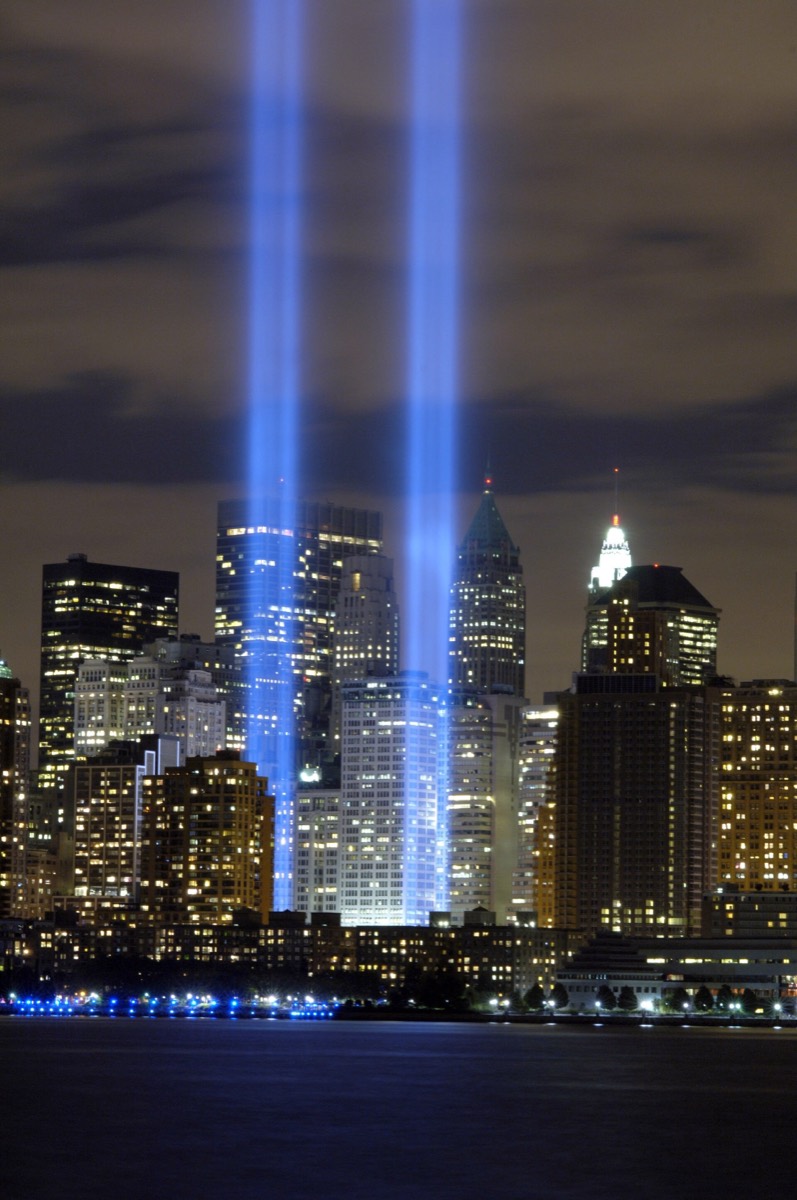
Twenty-five years on, the machines are unrecognisable and the reason we rebuilt them the way we did is not. Every resilient thing in this list exists because of a morning when the resilient things were not there.
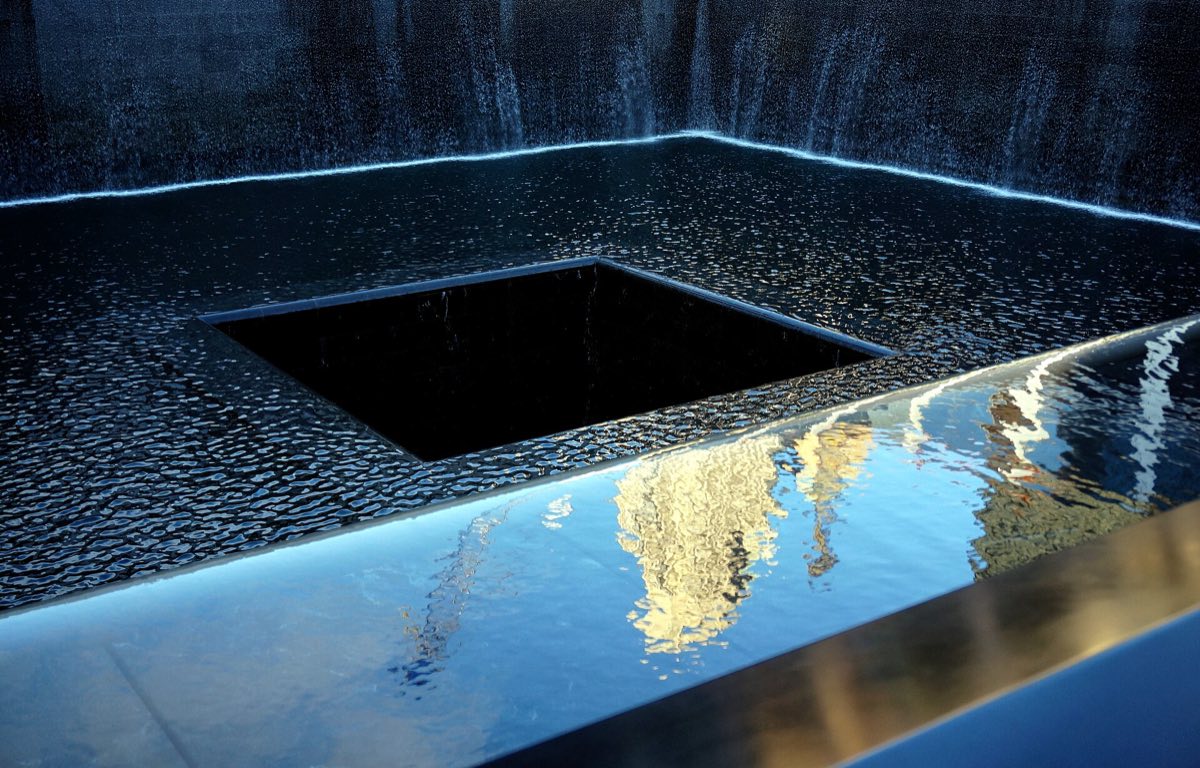
For the 2,977.
Sources
- Pew Research Center — home broadband and dial-up adoption, April 2001
- National Academies, The Internet Under Crisis Conditions: Learning from September 11
- Akamai Technologies — company history, Daniel M. Lewin
- The 9/11 Commission Report — emergency response and radio interoperability
- First Responder Network Authority (FirstNet) — origin and statutory authority
- Microsoft and Apple product release records, 2001
Images
- World Trade Center, summer 2001 — Carol M. Highsmith, Library of Congress (public domain)
- Lower Manhattan, 11 September 2001 — Michael Foran (CC BY 2.0)
- The Pentagon, 11 September 2001 — PH2 Bob Houlihan, U.S. Navy (public domain)
- World Trade Center site, 21 September 2001 — Michael Rieger, FEMA (public domain)
- National Guard soldier and FDNY firefighter, 18 September 2001 — Andrea Booher, FEMA (public domain)
- Tribute in Light — Denise Gould, U.S. Air Force (public domain)
- National September 11 Memorial — Ponor (CC BY-SA 4.0)
- Apple iMac G3 — Dennis van Zuijlekom (CC BY-SA 2.0)
- Nokia 3310 — Michael Brandtner (public domain)